Warmth within.
Winter without.
From the first barefoot step to a clear path outside. Explore electric and hydronic heating for comfortable interiors and winter-ready properties.
The right heat.
In the right place.
Every surface has a different job. Discover a heating approach that fits your space, your building, and the way you use it.
Residential
Bathrooms, kitchens, bedrooms, basements, and living spaces.
Commercial
Hotel rooms, offices, retail interiors, spas, and reception areas.
Comfort starts from the ground up.
Turn a cold floor into the most welcoming part of the room. Electric radiant heating delivers warmth beneath the finished surface, with room-by-room control for everyday comfort in homes and commercial interiors.
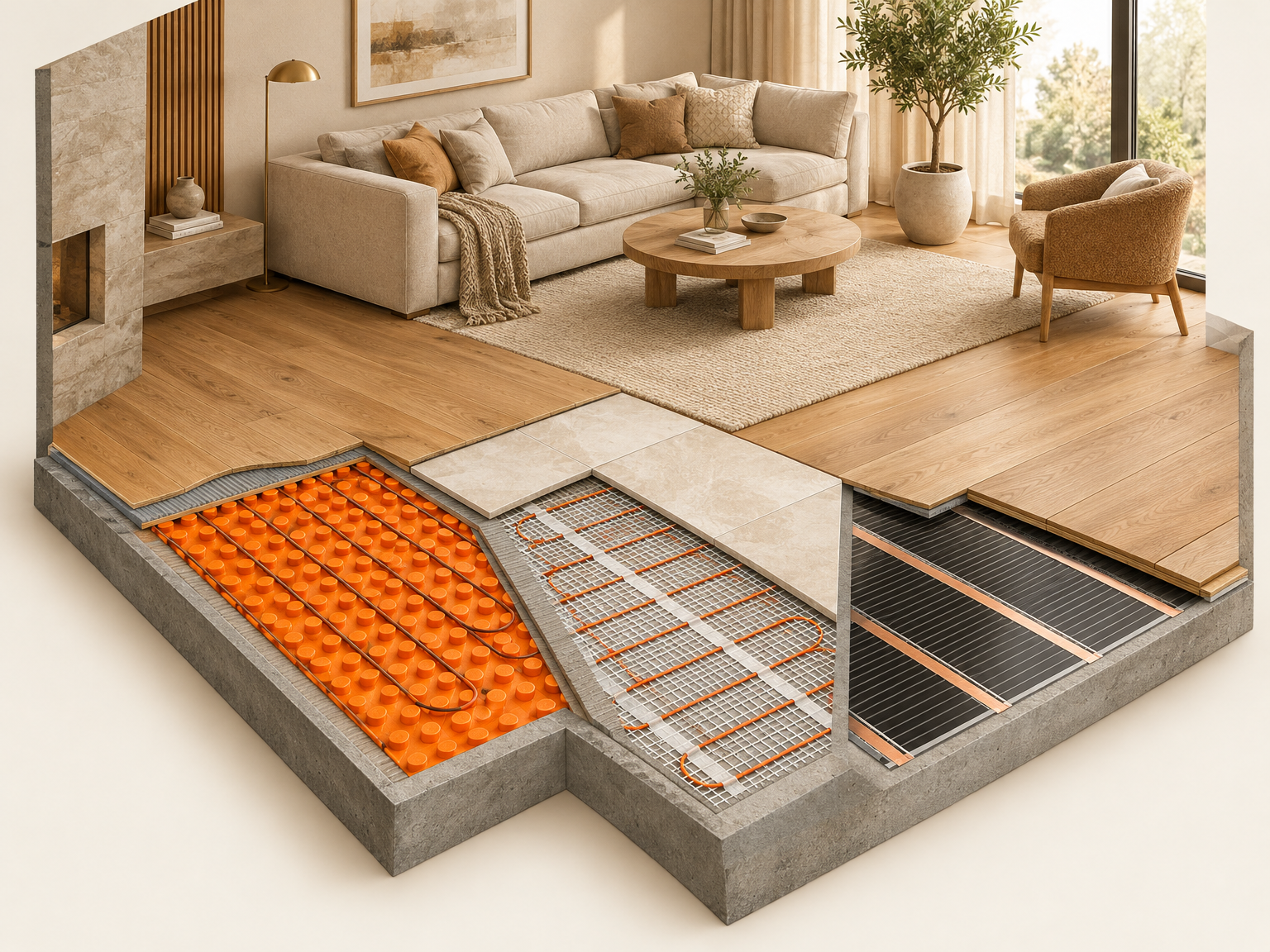
Membrane + heating wire
Heating cable fits into a purpose-designed uncoupling membrane beneath tile or stone. Flexible cable layouts work around fixtures and irregular room shapes.
Electric heating mats
Cable pre-spaced on mesh makes it easier to cover open floor areas with consistent spacing. A practical option for bathrooms, kitchens, and renovation projects.
Infrared heating foil
Low-profile carbon film or foil systems suit approved floating floor assemblies. Select a system specifically listed for the floor covering and room conditions.

Designed around your property. Match the heating system to the floor finish. Floor sensors, temperature limits, insulation, and manufacturer-approved assemblies matter.
Residential
Private driveways, front walks, garage aprons, patios, and entry steps.
Commercial
Office entrances, hotel drop-offs, parking ramps, retail walks, and loading approaches.
A clearer path through winter.
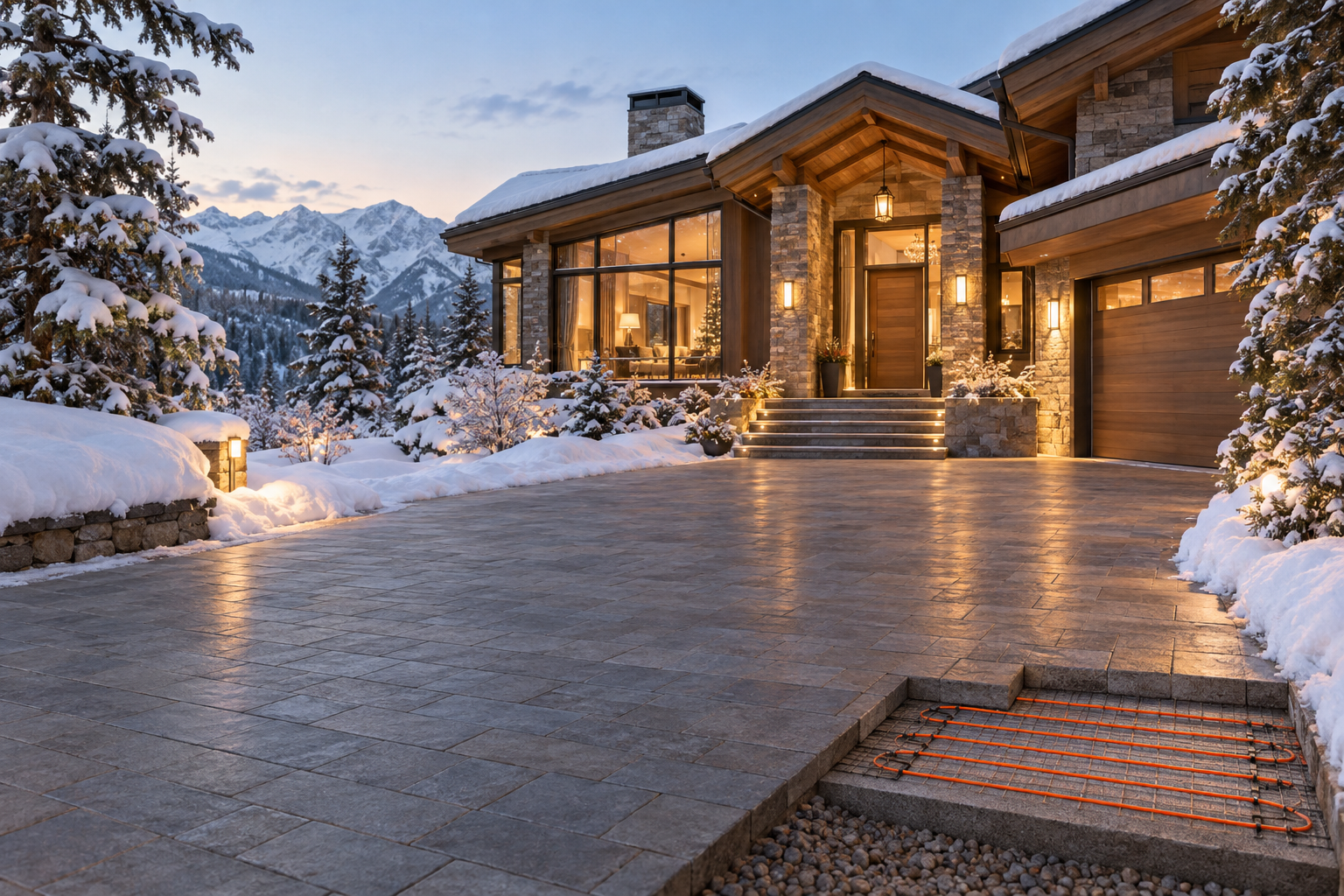
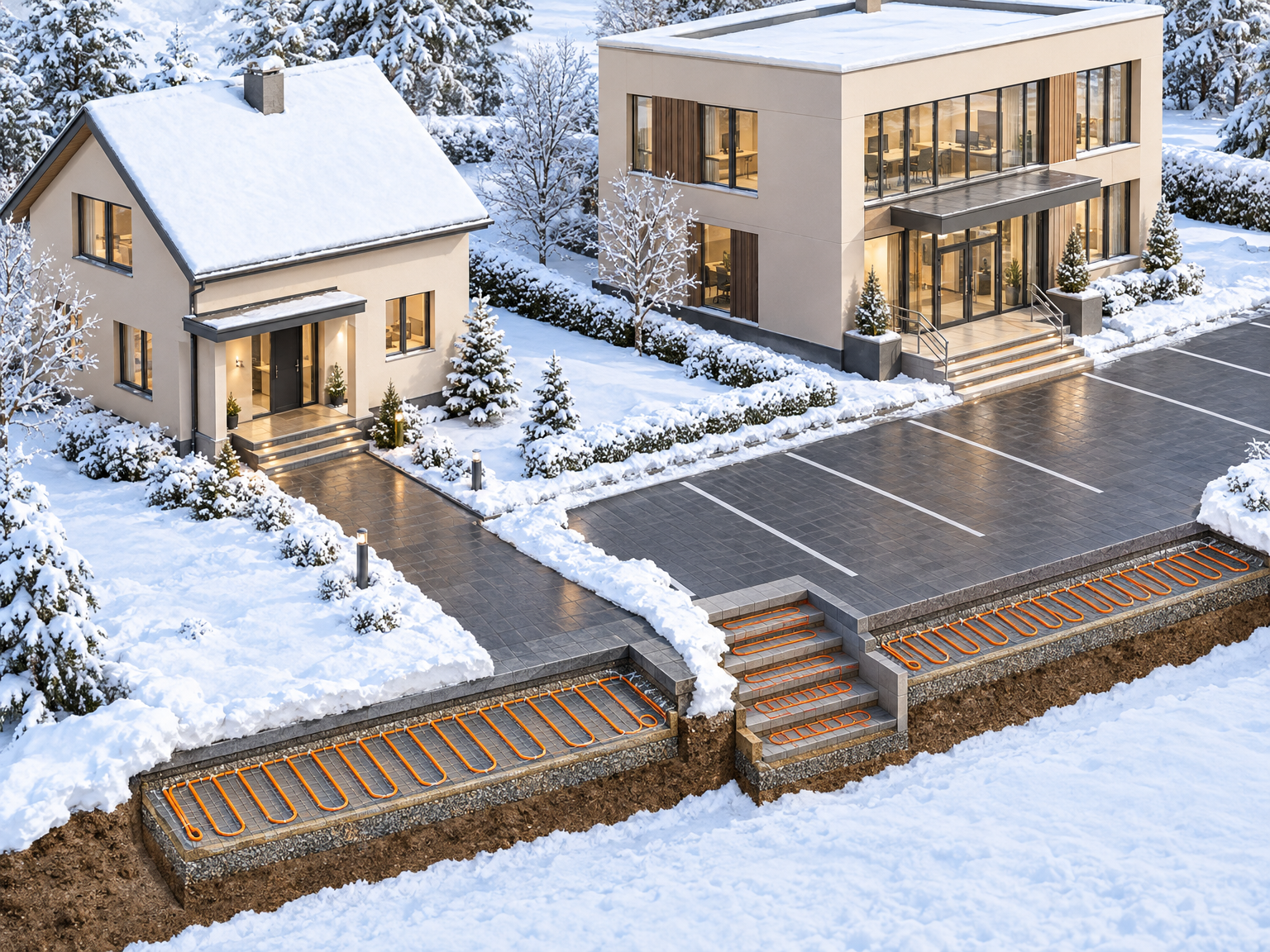
Keep the routes people depend on more accessible during winter weather. Purpose-rated electric cables or mats deliver heat beneath driveways, walkways, parking areas, and stairs to help melt snow and reduce ice buildup.
Driveways & parking
Heat a full driveway, selected wheel tracks, parking bays, or garage approaches. Cable selection and installation must suit the concrete, asphalt, or paver assembly.
Walkways & entrances
Create a connected heated route from the parking area to the front door, with separately controlled zones where appropriate.
Stairs & ramps
Address exposed treads, landings, and sloped access routes with a layout designed for their geometry, drainage, and required heat output.
Designed around your property. Snow and temperature sensors can activate heating when needed. Available electrical capacity, climate, drainage, and heated area determine the design.
Residential
House roofs, garage gutters, downspouts, balconies, and rooftop terraces.
Commercial
Apartment buildings, hotels, retail roofs, office terraces, and shared balconies.
Help meltwater keep moving.
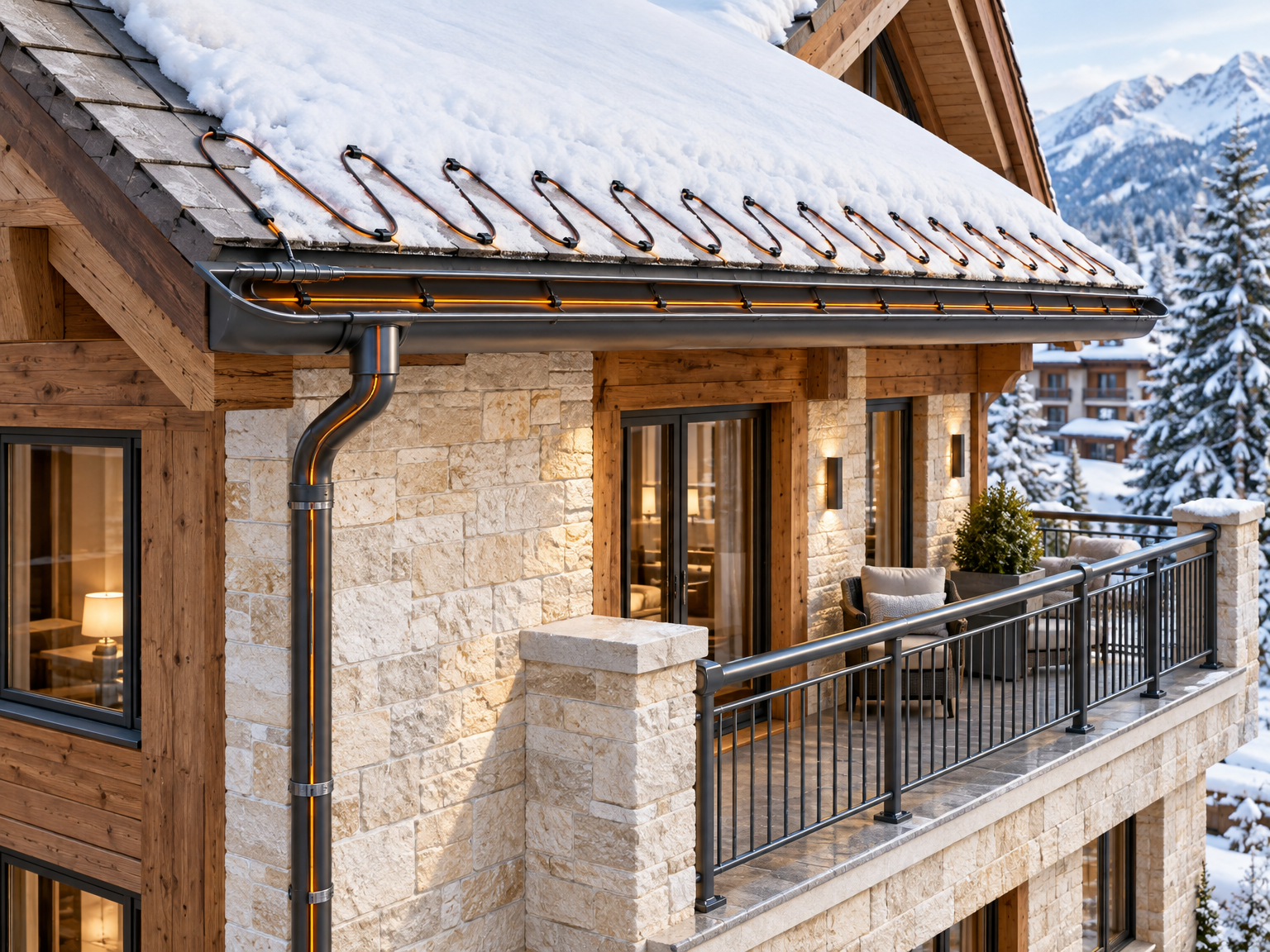
Winter protection goes beyond the driveway. Purpose-designed electric deicing helps maintain drainage paths at roof edges, gutters, and downspouts, while suitable embedded systems can reduce snow and ice on balconies and terraces.
Roof edges & valleys
Roof-rated heating cable helps maintain meltwater channels at vulnerable eaves and valleys. It is not intended to remove all snow from the roof.
Gutters & downspouts
Carry the heated drainage route through gutters and downspouts to a suitable discharge point, helping limit refreezing along the path.
Balconies & exposed areas
Use an exterior-rated surface-heating assembly for balconies, terraces, or exposed landings, coordinated with waterproofing and drainage.
Designed around your property. Roof deicing does not replace insulation, ventilation, or roof repairs. Use products listed for the exact application and protect waterproofing.
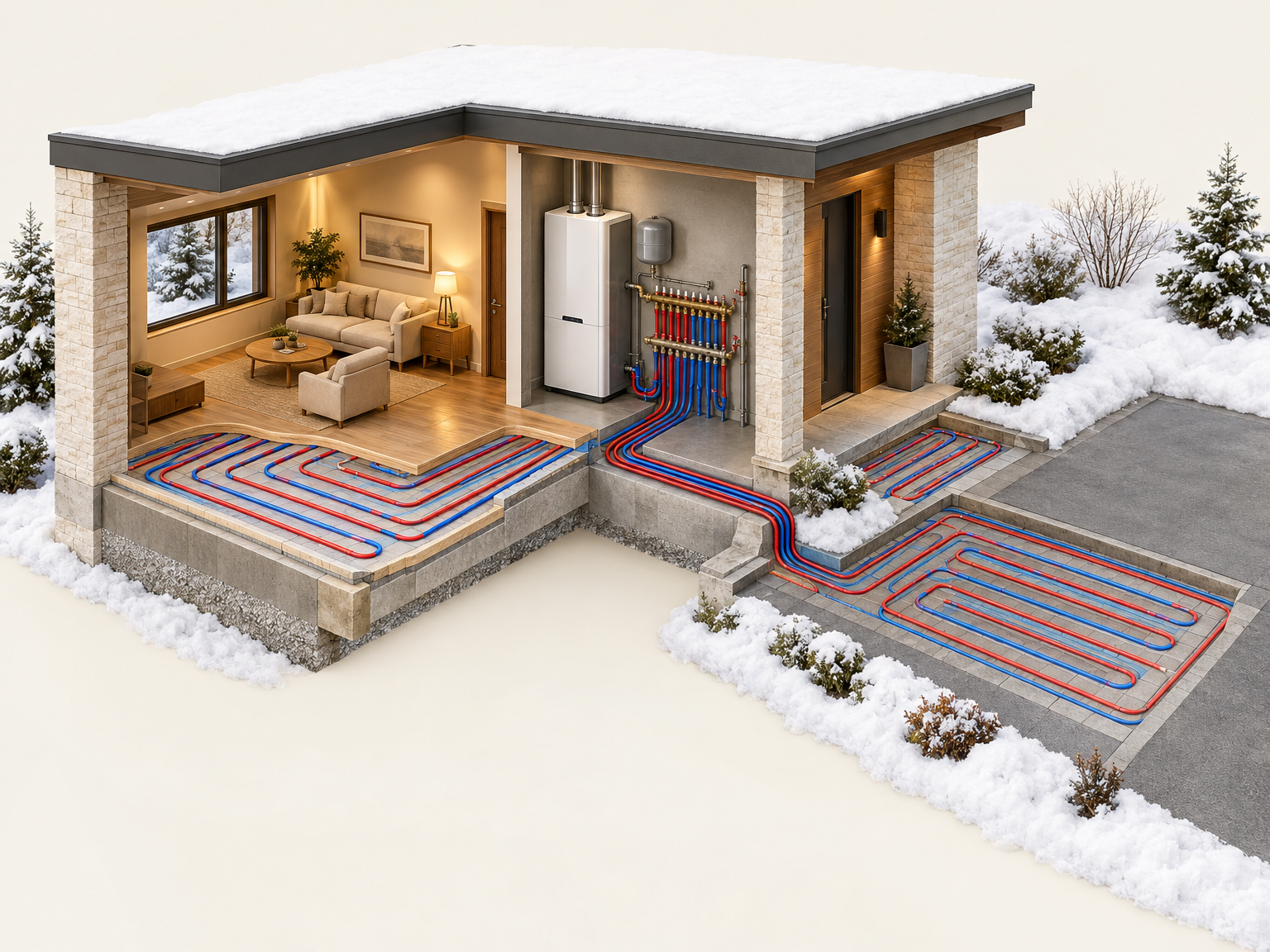
Residential
Whole-home floor heating, new construction, large driveways, and outdoor living areas.
Commercial
Multifamily buildings, warehouses, hotels, campuses, and larger snow-melting zones.
One approach. Warmth inside and out.
Hydronic systems circulate heated fluid through tubing beneath the surface. They can serve indoor radiant floors and outdoor snow-melting zones, making them worth evaluating for whole-building projects and larger heated areas.
Indoor radiant floors
Tubing in a slab or approved floor assembly provides even radiant warmth. Zoned manifolds allow different rooms or spaces to be controlled independently.
Outdoor snow melting
Application-rated tubing beneath driveways, parking areas, walks, and stairs circulates a suitable heat-transfer fluid with freeze protection.
Heat sources & controls
A compatible boiler or appropriately designed heat-pump system supplies the heat. Indoor and outdoor circuits may require different temperatures and hydraulic separation.
Designed around your property. Hydronic design includes heat loss, fluid temperature, pumps, manifolds, freeze protection, and maintenance. Operating cost depends on the heat source, rates, and climate.
Which system fits your project?
The best choice starts with your surface, available energy, and the size of the space.
| YOUR PROJECT | CONSIDER | DESIGN PRIORITY |
|---|---|---|
| Tile or stone interior | Membrane wire or electric mat | Floor build-up, sensors, finish compatibility |
| Approved floating floor | Infrared foil / film | Product listing and floor temperature limits |
| Driveway, walk, parking, or stairs | Electric or hydronic snow melting | Climate, drainage, area, and energy capacity |
| Roof, gutter, or downspout | Roof-rated electric deicing | A continuous meltwater drainage path |
| Whole building or larger heated area | Hydronic radiant heating | Heat source, zoning, and lifecycle cost |
This guide is a starting point, not an installation specification. Final selection requires a site-specific design and qualified installation.
Warm answers.
No guesswork.
Planning something specific?
Talk through your project
Can these systems be used in both homes and commercial buildings?
Yes. Electric and hydronic systems can serve residential and commercial projects when the products, controls, power supply, and installation are appropriate for the building and application. Commercial areas often need more detailed zoning and capacity planning.
Can radiant floor heating be my main heat source?
It can be, if a heat-loss calculation confirms the system can meet the room’s demand within the floor covering’s temperature limits. In other spaces, it is best used for floor comfort alongside another heating system.
Can heating be added to an existing driveway?
Sometimes, but installation depends on the existing surface and the selected system. Many embedded systems are installed during replacement or resurfacing. A site review is needed before choosing a retrofit method.
Does roof deicing remove all the snow?
No. Roof deicing is designed to help maintain drainage channels for meltwater, not to clear the entire roof or replace structural snow-load management, proper insulation, or ventilation.
Is electric or hydronic heating less expensive to run?
There is no universal answer. Heated area, weather, insulation, control strategy, local energy rates, and hydronic heat-source efficiency all affect operating cost. Compare installation, operation, and maintenance together.
Your space.
A warmer possibility.
A single room or an entire property. Start with a heating solution designed around you.